Monday, March 15, 2021

New Pecan Nut Casebearer Control Product

In a recent meeting I learned that FMC is reformulating the chemical called rynaxypyr (prevathon) and it is now approved for controlling insects in pecan orchards, especially the pecan nut casebearer.  


The product is called Vantacor and can be used on pecan nut casebearer in the Spring but it has the advantage of PNC control for over 3 weeks (up to 4 weeks) and there is no grazing restrictions.  Also the chemical itself is very safe to use with no restrictions on type of tractor, with or without a cab.  The long residual and its product safety will make it a great choice for both native and improved pecan orchards.  


FMC is sponsoring a free webinar on Tuesday, March 16 that pecan producers should check out.  I think you will get some good information on Vantacor and other FMC products for pecans.  I am not specificially trying to promote FMC or Vantacor but when a company does work to get more pecan products registered we do need to encourage that effort!


Link to Free FMC Webinar


Monday, March 8, 2021

Soil Moisture and Temperatures

This is the time of year when we are trying to get ready to plant corn and the question always comes up about when to plant.  Most everybody wants to plant as early as possible to avoid as much hot summer weather as possible and increase yields in the process.  But this is also true with almost all crops, the earlier you plant the higher the yields and the least amount of stress in the growing season.  


The first thing to think about is Summer Solstice on June 20 at 10:31 pm.  This is the date when the day length is the longest of the year and after that date every day gets shorter by nearly 2 minutes a day.  This lengthening of days and the shortening of days has an effect on plant growth - can you figure out which is better?  Of course, longer days are better for crops and we do see plants begin some change after summer solstice.  


That said we know to plant as early in the spring as possible to take advantage of longer days but if our soils are cold then the seed won’t come up.  So, we spend a lot of time looking at soil temperatures to plant corn, sorghum, cotton and peanuts.  Corn is 500, sorghum 600, cotton is 650 and peanuts is 650 degrees F taken at planting depth at 8am for 4-5 days.


So, what is the current soil temperature?  During the coldest part of the polar vortex it was right around 350 at the 2-4 inch depth, so too cold to plant anything.  But the last several days it has been above 500 and the weather should stay warm enough to keep soil temperatures rising enough that the corn planters will be running soon.


What about soil moisture?  Well we are dry and have been for some time.  Soil moisture at the end of January was 30% at 4 inches and 16% at 40 inches.  Today it is 24% at 4 inches and still at that 16-17% at 40 inches.  Ideally we want the 4 inch to be at 35% now and the 40 inch to be at 50% to give the deep moisture we need to grow any crop through the hot summer days. 

Winter Grasses or Maybe Weeds?

Most of the time we call these weeds but for lots of folks they are just another pasture grass - one that just happens to be about the only thing growing in winter!

From a livestock perspective these grasses are great because all three produce lush vegetation that is readily consumed by cattle, goats and sheep.  So, what’s the problem?  Well these grasses are fast becoming weeds especially in hay fields.  They can get so thick in growth that they will shade or choke out the bermudagrass from growing in the spring.  Then they get a lot less palatable for livestock as spring temperatures warm and days get longer.  These weeds will develop a seed head fast with very little leaf growth and cattle just won’t eat them.  These weeds in hay fields left to seed will really lower overall hay quality in that first hay cutting, one we usually expect to be the best quality.

So, what are they?  The top left picture is a grass we typically call Poa.  Technically it is Poa annua or annual bluegrass.  It is a short grass that can rapidly put out that fine seedhead you see.  It is a huge problem in lawns and other turf areas but can get to be a real problem in pastures too because there is not much competition in winter for a short grass.

The second grass picture (right) is a huge problem that is just about everywhere in Texas - rescuegrass.  You might see the name Red Brome but not often, it is rescuegrass.  It is called by that name because once upon a time cattle producers introduced it to native pastures.  At that time it grew well in fall, winter and spring when nothing else was green.  Unfortunately it grows so well that it is taking over many pastures and hay fields.  Its growing season is so long that it is a direct competitor with many native summer grasses including bermudagrass.

These last pictures are of the common wild oat.  Most people recognize it as an oat but since it is wild it does have some drawbacks.  As an oat plant the seed is nothing to really harvest and the plant itself produces a lot less forage.  You can see the oat seed in the picture below and it has unique hairy projections and a curly awn that actually help to corkscrew it into the soil with moisture.  At harvest it is almost impossible to distinguish from real oats until the seeds turn almost black. with drying.  

What can you do?  In a bermudagrass hay field now is
the time to apply a chemical control for all these grasses while the bermudagrass is dormant and these grasses are green.  If you are grazing cows then don't worry, they will be gone soon enough.


Saturday, January 30, 2021

7 Things to Do as a Pecan Orchard Manager in 2021


1.  Eliminate Deadwood!  This is a strange thing to say but so appropriate.  This actually comes from an editorial written in American Fruit Grower by David Eddy but I also wrote something similar for American Fruit Grower back in 2010.  The point is that too much of an orchard manager's time is spent in taking care of the parts of the orchard that will never be above average.  Instead, try focussing time and resources managing the already above average areas of your orchard.  It is almost certain that every dollar or every minute of time you spend on this productive part of the orchard will yield double what you invest.  Also, if we are over-producing low quality pecans, and we are, then why not eliminate completely those areas that consistently produce low yield, low quality pecans almost every year.


2.  Hedge, Hedge, Hedge! 
A recent article in Pecan South magazine by Dr. Lenny Wells makes the point very well indeed.  His article title was, "Make the Most of Hedge Pruning in the Southeast."  This title will cause Western Growers to just ignore the advice or to maybe even say I'm already doing that.  The problem is we are not doing it well and/or enough.  Hedging improves consistency of the crop, quality of the pecans, and overall size.  I could go into a lot of details here but his article says it all.  This picture is one I found on the internet and is beautiful. It shows the kind of hedging we are talking about.


3.  Don't Marry Those Trees, 
Don't Even Date Those Trees!  I know this is a tough one for everybody but these trees have a life and for some varieties that life needs to end.  Some varieties or even some specific trees are just not productive anymore and need to go.  See #1 again.  There are many, very productive acres that are covered in nothing but junk and yet we continue to prune, spray and harvest something that is out of date and poor quality.  We have varieties that are scab resistant, have better insect resistance, don't overbear like other varieties that have to be thinned, etc, etc.  Sharpen that chainsaw and selectively remove or just push down whole rows and definitely, in this difficult economic time, make room and get ready for better times.


4. Lower Your Inputs!   This is one of those topics that includes so much but let's identify a just a few.  I can hardly go in an orchard that doesn't have some irrigation problems.  Leaky valves, bad drip tubing, stopped up emitters and more, are all creating huge problems for trees.  Do things on time, is something we all need to hear.  Fertilizer applied late is usually not effective and a missed fertilizer application means missed opportunity.  Scout and use disease and insect thresholds versus making sprays just because it's time or everyone else is spraying.  Last, take those soil and tissue tests and use them for good decisions - don't just guess.


5.  Fix Your Sprayer and Fix Your Sprays! 
There is probably no more important piece of equipment than your sprayer. They need to be calibrated every year to ensure accuracy.  Tips wear out and need to be replaced.  Even fan blades can wear down and not put out the volume of air like before.  Agitation can be a problem with plugged lines.  Slow down as trees get thicker and thicker with leaves.  Get some help to see if the spray is going through the trees and into the next row.  Check the height of spray and maybe go back to No. 2 and hedge tree height back!  Why spend the money on tree sprays if you put them in a sprayer that doesn't work right. What about the chemicals and fertilizers you are using - are they any good?  Are they outdated, has resistance become an issue, are there better fertilizers that get to issues quicker, are there new and better biologicals as that industry grows every day?  Question what you are using, ask yourself why before you put anything in the tank! 


6.  Improve Your Harvest Quality!   This is not an easy fix, but with current pecan prices can pay big dividends. Keep your varieties separate, don't harvest and mix varieties. Keep your pecan nut sizes together. Buyers want the pecans to look uniform. Keep quality with quality. Crank down on the blower and remove those light pecans. The same variety, the same size and the same quality brings the highest prices - always.


7.  Improve Your Marketing Plan! 
I am assuming if you are reading this that you live in Texas.  If you grow and sell pecans in Texas you are in the best location in the world to sell pecans (see #6 above first).  Texas is a great marketing brand.  Anything Texas sells and people the world over want things from Texas and you are growing Texas Pecans.  Second, you are selling the only commercially sold native nut in the US.  People love to buy native products, American products, and pecans are truly Made in America!  Third, you are a Texas Pecan Farm Family.  People love knowing where the product is coming from and the people who grow it. Highlighting that fact to consumers sells pecans.  Put them all together, Texas - Native Nut - Pecan Farm Family, and almost all consumers will buy Texas Pecans grown by Texas Pecan Farm Families every time they can!  

Sunday, December 27, 2020

2020 Norman Borlaug Lifetime Achievement Award


     I am not one to "toot my own horn" but I am pretty proud of this award!  I have been involved with the Texas Plant Protection Association for years and have attended and even spoke at many past conferences.  The TPPA does a great job bringing together Educators, Researchers, and Industry into one group and the information is always outstanding.  

    Now for the other side.  I used to work for the Norman Borlaug Institute for International Agriculture at TAMU and have even done some consulting work on special projects for the Institute.  Working for the Borlaug Institute enabled me to know more about Dr. Borlaug, his work and his legacy.  I even had an opportunity to work with his granddaughter, Julie Borlaug, which was a huge honor.  The Borlaug Institute does work all over the world extending Dr. Borlaug's wonderful legacy.

    So, the combination of an award with Dr. Borlaug's name attached, given from an organization that has meant a lot to me over several decades, and I am more than humbled!  A big thanks to Ray Smith, TPPA Board Chairman and long time friend and coworker for his mentorship and encouragement - it has meant a lot.   Click here to read the Farm Progress article.   BW

SME Farm Planning & Operations Management Course for Nigerian Agriculture


     I recently finished a complete training course online for Small and Medium Enterprise Farm Planning and Operations Management.  This course was sponsored by Winrock International and US-AID in Cooperation with Box Office Hub in Nigeria.  My job was to develop a module of about 10 videos centered around getting involved in agriculture, planning your farm, actual farming, new technologies, markets and much more.  Box Office Hub took my videos, broke them up into training modules, added some evaluations and fun exercises, and then hosted them online for young entrepreneurs to complete.  

    To be honest, this was like nothing I have ever done before but it was extremely enjoyable, challenging, and eye opening!  I learned a great deal about making videos using a computer, webcam use, and OBS software.  There was a learning curve, but overall not too bad, and once learned it goes fast.  The hardest part for this Extension person was not being able to talk to growers and adapt my talks to their needs.  But, Box Office Hub has a lot of experience doing things like this and they helped guide me and edit me when needed.

    How did I get involved in something like this?  Well, there is a long story but basically I have known and worked with Winrock International for years.  With the COVID restrictions on travel they have had to be flexible and change some in-person training to on-line classes.  These remote training programs are a way to bring in "experts" that small farmers may never meet, and let them get experience they may never have.  In the process of doing the videos my contact information is available and I am available for any Nigerian farmer to talk to, text or email.  

    This kind of training can be followed up with visits and more trainings as things change in our world, but for now the education continues even though we are fighting a pandemic.  Also, it opens up all kinds of options that really I had never dreamed about before.  

Click here to link to the SME Farm Planning and Operations Management Class

Wednesday, December 23, 2020

Soil Temperatures, Do They Matter?


   Last year I told you about a weather station located in Stephenville that is great to use.  If you will go to this website, https://wcc.sc.egov.usda.gov/nwcc/site?sitenum=2203 you will be able to get air temperature, soil temperature and humidity, perfect for knowing when to plant any crop. Here are a few examples, corn 50, sorghum 60, cotton 65, okra 70, bermudagrass 70, carrots 45, tomato 65.

    The temperatures on the website are in Celsius, but to convert multiply the number times 1.8 and add 32.   So a 20 temperature is 20*1.8 equals 36 + 32 equals 68.


Dhurrin Free Sorghum-Sudangrass?

    What is dhurrin free sorghum-sudangrass? Well, prussic acid is commonly produced in sorghum plants including johnsongrass.  This is a real problem for cattle producers  because prussic acid can kill cows!  Prussic acid is produced in the sorghum plants by the breakdown of dhurrin which accumulates in young tissues especially when under stress.  So if you could develop a plant without dhurrin then you have a plant without prussic acid!

    Purdue University has developed a dhurrin free (DX) sorghum-sudangrass hybrid that should be a super addition to any grazing program.  According to a research study conducted by Purdue they compared their new DX hybrid to 3 conventional hybrids and the sheep in the experiment grazed more on the DX hybrid.  Also the DX hybrid was safer than all 3 conventional hybrids so that by September they found prussic acid in all 3 conventional hybrids and none in the DX hybrid.  Hopefully this new DX hybrid will be available soon.


Saturday, October 20, 2018

New Prickly Pear Product


Dow Agrosciences is changing lots of things up from a name change to a new prickly pear control chemical. MezaVue.  It is a weird name but basically it is the old Surmount herbicide that has done a great job and added in the chemical aminopyralid.  This chemical has proved its worth in pasture weed control and its addition to Surmount is supposed to kill cactus even faster than before.  Surmount was a great improvement over Tordon and MezaVue will improve that even more.  We will keep you posted.

Friday, October 19, 2018

Peanuts in the Area


In driving around this area you may have noticed several fields of peanuts.  No, this is not a new crop for our area as many old timers like Jim Farley or Bill Boswell can explain.  Peanuts are an old crop that has returned with a new purpose.  Growers are interested in peanuts for several reasons.  One, the price is better than it has been for many years.  It’s not great but it is better.  Second, it is a great rotation crop to cotton.  Peanuts are a deep rooted legume and the crop residue is a great soil builder.  Third, both Golden and Birdsong Peanut Companies are renewing their interest in this peanut producing area.  They have upgraded their facilities, improved their peanut handling for growers and will help growers get the crop to their facilities.  So, peanuts are back and it sure feels good!

Beef Cow Feeding


It is obvious that we are low on forages this year.  The lack of rain in the critical growing portion of the year has put every beef producer in a bind.  In good rainfall years we can see our native pastures supplying 3,000 lbs per acre, improved natives around 4,500 lbs per year and Tifton 85 bermudagrass around 8,000 lbs per acre.  Figure on grazing 250 days a year and we generally need 25 acres of native or 10 acres of bermudagrass per cow for grazing.  This leaves about 115 days for feeding hay which is about  right!  115 days times 30lbs per day is 3,450 lbs of hay you need but a lot is wasted so you need about 4 bales per cow.  Now how much they eat depends on how good your hay is, less if it is poor quality!!
Years like this has pushed hay prices to $80 per roll or higher and so total for 4 rolls is $320.  The hope is that your hay quality is high enough to meet cow needs and you don’t have to add to the $320 with lots of supplements.
So what does a dry cow need everyday to meet her needs and not be hurt?  If your hay is 9% crude protein and 50% TDN (energy) then feeding 30 lbs a day meets her needs.  If on the other hand you have typical local hay at 7% crude protein and 45% TDN then you need to supplement some protein and energy source.
But the real question is what if I don’t have the hay or the hay is limited?  Then you need a supplement that provides enough protein and energy to maintain her condition and cheaper than buying quality hay.  Just keep in mind that at $80 per roll that is about $2.80 per day in hay cost.  If you only have enough hay to feed 75% of normal then 75% of $2.80 is $2.10 in hay costs leaving you 70 cents to buy a supplement.  Can you do that?
Maybe you can with a good small grain pasture.  Small grains are high in protein and energy, highly digestible and filling.  They can be a great supplement if limit grazed.  They can easily produce 4,000 lbs of dry matter per acre so that as a supplement means it doesn’t take many acres to limit graze with hay.  
Lastly, it is important to add that if you supplement a protein only, then you can skip days even up to a week with no digestive upset in your cows.  If you feed a protein-energy supplement then they must be fed daily or your cattle can go off feed and take days to adjust.  Any diet changes should be done slowly and regularly!

Herbicide Modes of Action “Amino Acid Synthesis Inhibitors”

There are lots of herbicides available for controlling almost every kind of weed there is but knowing which one to use can be difficult.  Let me try to unscramble some of the confusing words we use all the time by talking in this newsletter about how herbicides work commonly known as “mode of action.”.
First we have at least 27 different modes of action (MOA) in herbicides.  What this means is that the herbicide chemical will go to a particular part or site of the plant and work to disrupt that process in the plant.  For instance, Plateau is a type of amino acid synthesis inhibitor.  It prevents the synthesis or formation of one or more amino acids in the plant.  These amino acids are essential to the plant for growth because they are the food for the plant.  So when you use an amino acid synthesis inhibitor the plant begins to starve to death.  This is the reason the “Plateau” or “Outrider,” has the reputation of working slow.
What else is in this family of herbicides?  You may recognize some of the common names of these imidizonaline herbicides like Cadre, Plateau, Pursuit.  Or maybe these in the sulfonylurea (SU) herbicides like Cimarron Plus, Glean, Ally, Amber, Permit, Sandea or Outrider.  All these are in the family of amino acid synthesis inhibitors and have the same mode of action.

Maximilian Sunflower, Texas Gayfeather. Pretty Perennials!


Maybe you have noticed or at least you will notice soon that this is the year for perennial plants!  The flowers mentioned above are perennial flowers (come back from roots) that you are seeing or soon will  see along roadsides or maybe in your pastures.  

Maximilian sunflower is rare where cattle graze since they are a favorite of cattle and generally high in nutrition. Gayfeather is not as palatable except for wildlife but its showy blooms are all over the place in October.  Look for them as you drive Texas’ back country roads.   


Minimum Till Small Grain


Well, we finally got some good general rains throughout the area and the temperatures may still be hot but football and fall is finally here.  That said, most wildlife and livestock producers like to plant small grains -oats and/or wheat, to supplement their grazing or attract wildlife.  So every year we wait on a rain, get out the tractor and disk, and plow at least twice to chop up and bury all that trash thats been growing all summer.  Then we fertilize and plow again and then we wait on a rain to plant and hope that there is enough moisture to bring up a seed.

Is there another way?  Yes! and its called minimum tillage even though its really not minimum till.  What I mean is that instead of changing your procedure you change the date.  If you will plow and even fertilize P and K in the months of July or early August you will have the field essentially ready to plant.  Then when you are ready to plant we can spray an over the top herbicide like Roundup with nitrogen fertilizer to eliminate small weeds and grass that have popped up and then you plant.  The seedbed may have a slight crust that a grain drill can easily penetrate.  Because you have done your tillage early the rains you get settle the soil and allow for a smooth packed seedbed.  The packed seedbed will inhibit weed seedling germination while allowing your small grain to push up through the grain drill row fast.  And this Roundup spray is cheaper than plowing!

Thursday, September 15, 2016

Small Grain Forage or Grain

What is a small grain?  We use this term loosely when we generally mean a cereal grain such as oats, wheat, triticale, barley or rye or even rice although here we don't mean rice!  

Small grains are typically planted in the fall as temperatures begin to cool and we start to get fall moisture.  In this area we do plant small grains to actually harvest the seed but overall livestock raisers plant thousands of acres of small grains simply for cattle to graze in the winter and spring.

Planting Small Grains for Grazing

Triticale Variety

If you are strictly interested in grazing high quality small grains for your cattle herd or stockers or bred heifers, then here are a few guidelines:

  • We plant early as in NOW, in order to get these plants growing so we can begin grazing early fall and through the winter if possible.
  • Generally people don't worry about spending extra money on a named or numbered variety, they simply choose a bulk variety.  What small grain type to plant?  Well some people have their favorites but overall they all do well if planted properly.  In general either a triticale which is a wheat-rye cross or just rye is planted on very sandy soils because they just do better than oats or wheat on sand.  Oats are highly digestible and cattle do well on them, but they can winter freeze.  So you have lots of choices!
  • How much seed do you plant?  Again people do have their preferences but to encourage fall grazing we plant more than if you just want to harvest grain.  So plant at least a bushel and more likely 2-3 bushels per acre.  For oats that means 3 bushels or 96 lbs per acre and wheat at 2 bushels or 120 lbs per acre or anything in-between. 
  • Small grains do like nitrogen and phosphorus.  Nitrogen can be applied before and after planting but phosphorus does need to be applied to the soil before planting.  We get no response to phosphorus after planting.  How much?  A soil test sure helps to know but without it then a lot of growers use 100#’s of 18-46-0 per acre along with 100#’s of 34-0-0 in the fall followed by another 200#’s of 34-0-0 in January or early February.  
  • Lastly if you plant early then watch out for armyworms and greenbugs.  You might have to spray or at least have the cattle ready to graze to keep them under control.

Sunday, March 6, 2016

Bermudagrass Stem Maggot


 I sure don't want to sound all doom and gloom but we do need to make sure all our pasture and hay growers are aware of a severe problem that is only getting worse.  Bermudagrass stem maggot is here and it doesn't seem to be going away!


If you have coastal bermudagrass hay or pasture then you know about this insect. If you are not sure then walk out in your pastures now and look at the dead tips. This insect has four life stages: the adult is a small fly, the adult lays an egg on the bermudagrass stem, the egg hatches a maggot or small larvae that burrows into the stem and feeds for several days.  The feeding it does cuts through the topmost leaves so that they die.  These leaves that died look just like a killing frost came through without the cold weather.

Alicia, Coastal and Tifton 44 are the most susceptible since they are finer textured bermudagrasses.  Tifton 85, which is a coarser grass, just doesn't have much problem with BSM.  If you are going to be sprigging this next year you really should consider this insect and its potential damage in the future for your choice of grass to grow.

Soil Test or Tissue Test or Both?

How do you know if you need a soil sample or maybe a tissue sample?  What is a tissue sample?  Do I need both?

Most people are familiar with soil samples and we literally take hundreds every year.  Soil samples are very important where we are growing any annual crop like cotton, wheat, sorghum, etc.  And they are important if we are growing perennial crops like bermudagrass for hay, especially where we take multiple cuttings.

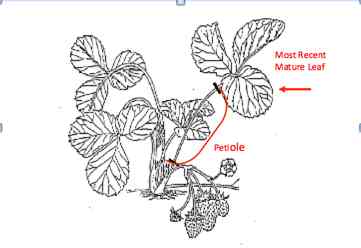
So what is a tissue sample?  Tissue samples are usually leaves but can be other plant parts that are taken or pulled during the growing season.  For instance, in pecans we would pull mature leaves from about the middle of the tree canopy.  These leaves are taken from several trees to make up a sample to send in to the lab.  These samples tell us if the plant is getting all the nutrients it needs from the soil and/or our fertilizer applications.  Sometimes we can supply a nutrient in the soil and the soil properties keep it from being available to the plant.  Or in the case of perennial plants like trees they may be getting nutrients from deeper down than the soil sample was taken.  The tissue sample along with a soil sample is a great way to make decisions  about crop fertility and know you are making a difference in crop yield.  As with soil samples it is important to take  tissue samples for several years to compare results from year to year.

Monday, March 9, 2015

Obscure Scale on Pecan


Bill Ree wrote this for his newsletter and I thought it needed to be shared.
As the name implies infestations are obscure and difficult to spot. Infestations, especially heavy infestations will appear as if someone has sprinkled ash on the limbs as shown in the attached picture. When checking for this type of infestation it is best to check on 3 or 4 year old wood.

These insects feed by inserting their mouthparts or styles into the conductive tissue of the tree and feed on the plant sap. They do not produce any honeydew. Heavy infestations can cause limb dieback and will reduce overall tree vigor.

In the life cycle of this scale, females will excrete a waxy covering about 1/8 inch in diameter under which they feed and lay eggs. When immatures emerge from eggs they are referred to as crawlers  which is the only mobile stage of this insect. Once a crawler has moved and settled in a new location it begins to feed, excretes the waxy covering and it will never move again. Fortunately, there is only one generation per year.  

There are some beneficial lady beetles and mites that feed on scale and a few parasites which help, but if control is needed that control will have to come from the application of a dormant oil. Although we now have some highly refined light summer oils, pecan is considered an oil sensitive crop and any oil application needs to be restricted to the late dormant season.

It is the general thought that oils kill insects by suffocation where the oil covering prevents respiration. Although the exact mode of action can be debated the bottom line is that there has to be good coverage.

Scale control can be difficult and with heavy infestations it could take a couple seasons for management. Some of the difficulties for control include:  the scale's waxy cover provides protection against pesticide exposure; some crawlers tend to settle under the protection of older scale covers, thus producing a layering effect; and crawler activity extends over a long period of time.

During the growing season, when dormant oil cannot be used, insecticide treatments can be used to control crawlers but these treatments must be correctly timed for crawler activity.

There are several types of horticultural oils on the market today which can cause some confusion, plus, labels on horticultural oils will contain a different terminology. Not all horticultural oils are the same and an understanding of label information is necessary to know the difference. The following is a brief description of different types of oils and an explanation of some of the information that should be found on the label.

Dormant Oil: This class of oil is the heaviest of the horticultural oils and is formulated for use on dormant plants only. Apply these oils as late in the dormant season as possible but before budbreak. Dormant oil effectiveness increases as temperatures increase and insect metabolism is accelerated.

Summer Oils:  Summer oils are slightly lighter than dormant oils and are formulated for use during the spring and summer on some plants.

Superior Oils: This class of oil is the most highly refined of all the horticultural oils. These oils are used primarily during the growing season; however, they may be used as a dormant oil by changing the rates.

When purchasing a horticultural oil it is important that you understand the information on the label. The following information should be on the label and will assist you in determining the quality.

Unsulfonated Residue (UR): this number is a measure of purity or degree of refinement and is always listed as a percent with 92 being the minimum. The higher the percent, the higher the purity.

Viscosity: This is a property used to define oil heaviness and is expressed in seconds. Horticultural oils fall into the 60 to 200 second range, with the heavier oils rating 100 or higher. The higher the number the more persistent the oil on the plant. Dormant or semi-dormant plants will tolerate heavier deposits than trees in leaf.

Distillation: distillation temperature range is a measure of the volatility of an oil. Horticultural oils have a distillation range of 400 to 488 F. The lower the distillation temperature the quicker the evaporation. Dormant oils will have a distillation range of around 438 F while superior oils will be around 412 F.

Gravity: This is another method of weighing oil. When related to viscosity and the UR it can provide an index to oil paraffinicity. Oils should be largely paraffinic to be safe for plants. Gravity is measured in degrees and the higher the number the more paraffinic the oil. Thirty degrees is the minimum standard.

Horticultural oils are an effective and safe way to control scale on pecans. In Texas, dormant oils are permitted in the Texas Department of Agricultures certified organic production (Organic Food Standards and Certification, Texas Administrative Code, Title 4, Part 1 Chapter 18).

Pecan is considered an oil sensitive crop therefore only dormant oils are recommended. Before purchasing and applying any type of horticultural oil ALWAYS READ THE LABEL. When applying, make sure there is good agitation in the tank. Even though you are making an application to a dormant tree, injury or tree death can occur if there is poor agitation which allows the oil and water to separate and trees receive high concentrations of oil.

Tuesday, February 24, 2015

Do You Have Borers or Just a Woodpecker?


The yellow-bellied sapsucker (Sphyrapicus varius), a member of the woodpecker family, is a migratory bird whose summer breeding range includes Texas. The identifying field markings of adult birds are a black crescent on the breast, pale yellow belly, white wing stripe, and a crimson crown. The male also has a crimson chin and throat, distinguishing him from the female whose chin and throat are white.

Although insects make up part of its diet, the sapsucker is better known for its boring of numerous holes in the bark of live trees to obtain sap, the activity from which it derives its name.

The yellow-bellied sapsucker is the only member of the woodpecker family to cause this type of injury. More than 250 species of woody plants are known to be attacked. In Texas they love our oak species and seem to be particularly fond of red oak and burr oak but they love many species of trees and even shrubs.

The sapsucker bores neat rows of 1/4-inch holes spaced closely together through the bark of trees along and around portions of the limbs or trunk. As these holes fill with sap the sapsucker uses its brush-like tongue to draw it out. These holes are periodically enlarged and portions of the cambium and inner bark, together with the fresh sap, are eaten.  Puncture wounds and resulting sap flow on branches and trunks of trees are the most obvious symptoms of injury inflicted by the sapsucker.

After repeated attacks on the same area of a tree, large patches of bark may be removed but I seldom see this happen. If this area is girdled, the portion of tree above this point will die. Many small limbs are killed and sometimes the trunk is girdled and the whole tree is killed but not often. Sapsucker feeding on shade and ornamental trees leaves unsightly bleeding wounds that attract bees, hornets, and other insects to the sweet, oozing sap.

Early in the spring the sapsucker tests many trees around its selected nesting site by making sample drillings before selecting ones it prefers. These trees, because of quantity or sugar content of the sap, are visited several times a day for the rest of the season and sometimes are used as a food source for several years.

Feeding wounds serve as entry courts for a wide variety of wood decay or stain fungi and bacteria. On high quality hardwoods, sapsucker wounds cause a grade defect called "bird peck" that lowers the value of the trees. Many forest trees are attacked high in the crowns, making light feeding wounds or sample drillings less evident. A condition known as black bark may develop which results from certain fungi colonizing the sap flow and discoloring the bark, and is good evidence that injury exists.

To discourage sapsuckers from feeding on a favorite shade tree, wrap hardware cloth or burlap around the area being tapped or smear a sticky repellent material, such as bird tanglefoot, on the bark. On large acreage or orchards, leave favorite feeding trees of the sapsucker untreated. Birds will concentrate their feeding activities on these favorite trees, which often protects nearby trees from serious injury.

The Migratory Bird Treaty Act and Federal regulations promulgated under its authority prohibit shooting or trapping of sapsuckers. Shooting of this species would be an ineffective control anyway because transient birds tend to replace occasional losses to local sapsucker populations.

Monday, February 23, 2015

Bareroot, Balled and Burlapped and Container Grown Plants

Winter is a great time to plant trees and shrubs. It is highly recommended that you put any tree or shrub out well before hot weather to give plants a time to grow some roots before they have to face hot temperatures.

Container plants have the advantage of having all of their roots intact and ready to grow if the pot was properly cared for. Container grown plants are great but be careful! Nurseries grow plants in pots so that they can be sold easily but trees continue to grow even in a pot. This growing means that pots can become too small for the tree as it grows and so the plant becomes root-bound (stunted). To check and see if a plant is root-bound just hold the pot and lift the tree out of the pot. If the roots are just to the pot sides and no roots are circling then the tree should be okay. When planting a container grown plant dig a hole bigger than the plant by double the width but no deeper. Remove the container and plant into the hole as quickly as possible. Air kills the little white hair roots very fast if not put into the ground. Once the hole is back filled with soil then water thoroughly to remove the air spaces.

B&B or Balled and Burlapped plants are not container grown and you need to understand that before ordering them. These plants may have been grown in a nursery but they were dug out of the ground so that many of the roots have been cut off but the soil ball is still intact and very heavy. In fact there should be about 10-12 inches of ball for every inch of tree trunk diameter. When you get a B&B plant remove all plastic including any string or twine. You can leave the burlap only if it is not plastic. If there is a wire basket you can leave it as the roots will grow right through. The biggest problem with B&B trees is that the hole is usually dug with the same tree spade that dug the tree. Tree spades leave the hole sides very slick and hard for roots to penetrate. The best hole is wider but not deeper than the ball.

Bareroot trees are just trees that have been dug very carefully in the nursery so that the roots are pretty much intact but there is no soil. As you can imagine these trees are much more fragile but without the soil they are easier to handle both for the nurseryman and you. Most bareroot trees are dug and then “healed in” at the nursery till you purchase them. To plant them be very sure you keep the roots moist at all times while you’re planting. Dig the hole as deep as the roots go and just as wide. Put the tree in the hole and back fill slowly adding dirt while you pack it. Once the hole is full you need to water well to take out air pockets. Bareroot trees need to be planted now and most fruit and nut trees are sold this way.